FDA Clears Mammo Risk: AI Reads Five-Year Breast Cancer Risk Off a Routine 3D Mammogram
FDA 510(k) K262709 clears DeepHealth's Mammo Risk, the first image-based five-year breast cancer risk prediction tool for 3D mammography, validated on 65,000+ mammograms across 10 U.S. sites.
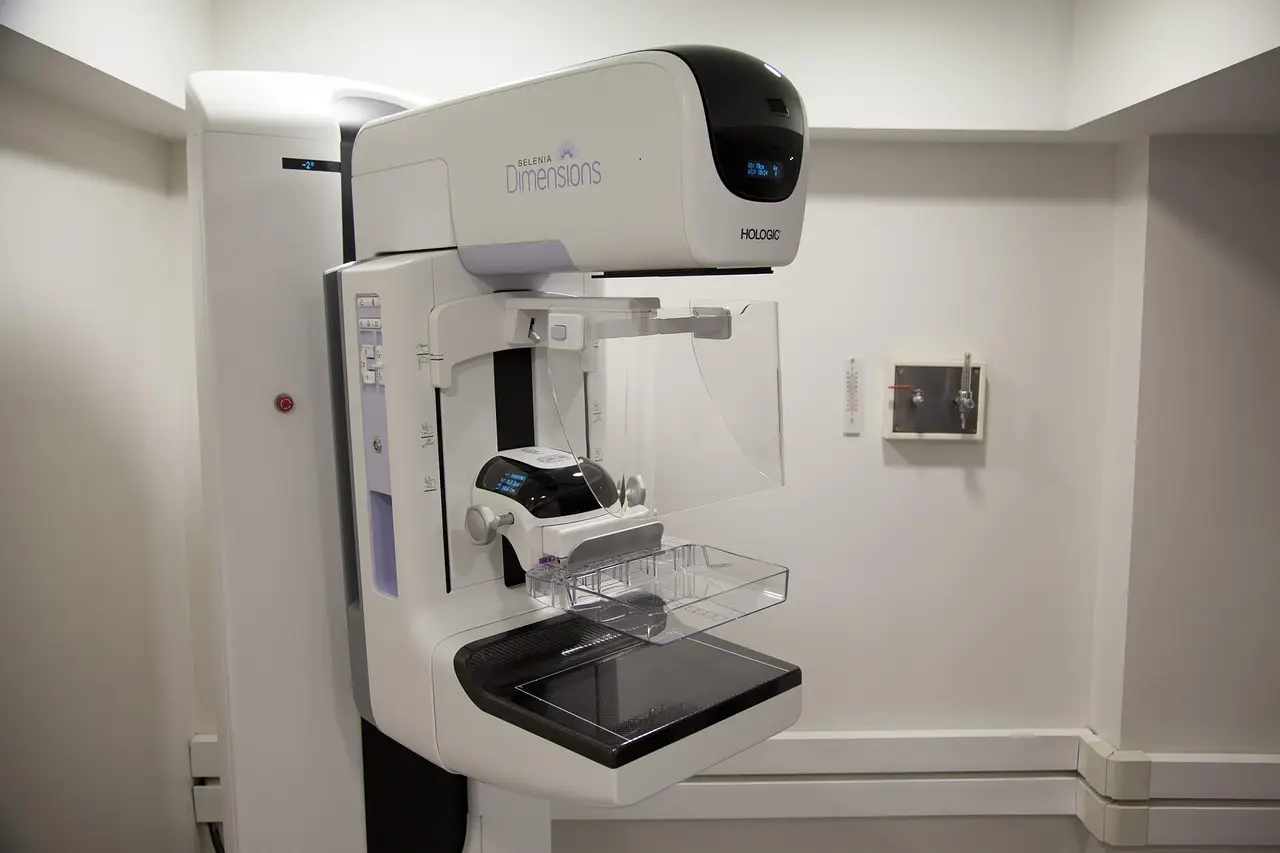
The FDA cleared, on Nov. 23, 2026, the first image-based breast cancer risk prediction software for 3D mammography — DeepHealth's Mammo Risk, 510(k) K262709 — which derives three-, four- and five-year risk estimates from mammograms already on the archive. No additional scans. No questionnaire. The regulator's timing matters: 3D mammography now sits in more than 90% of U.S. mammography facilities, per the FDA's 2025 Scorecard Statistics, and an estimated 321,910 U.S. women will hear an invasive breast cancer diagnosis in 2026, per American Cancer Society figures.
What does the clearance actually cover?
Mammo Risk works with supported systems from multiple vendors and runs on combined 3D/2D workflows — which is to say, the dominant U.S. screening modality rather than a niche one. The software flags patients with no apparent signs of cancer but elevated five-year risk, positioning itself as triage for personalized screening pathways rather than another detection tool.
The payer angle deserves attention. The American Medical Association established a Category III CPT code, effective Jan. 1, 2027, for tracking utilization of image-based risk assessment. Category III means tracking, not payment. Reimbursement decisions will follow the evidence the code now makes collectable. Plan accordingly.
How strong is the evidence?
An independent, multicenter pivotal study spanning more than 65,000 screening mammograms across 10 U.S. clinical sites demonstrated strong predictive performance for future breast cancer risk. Performance held across subgroups that matter: Black women and women with dense breasts, two populations where traditional models have been demonstrably less accurate and outcomes historically worse, per JAMA Oncol analyses by Kerlikowske et al. (2024) and Engmann et al. (2017).
The model was trained on 220,000 studies. Its predecessor, CE-marked and commercial in Europe, predicted risk only two years ahead. In a peer-reviewed Karolinska Institute-led study published in Science Translational Medicine — Eriksson et al., 2022, drawing on more than 154,000 U.S. women undergoing 3D mammography — that earlier generation showed an estimated 2.4-fold sensitivity advantage over the Tyrer-Cuzick risk model when considering supplemental screening for the 12% of women at highest risk. Mammo Risk extends that horizon to five years.
What are the stakeholders saying?
Niccolò Stefani, M.D., Business and Product Leader, Clinical AI at DeepHealth, said: "By launching the world's first and only image-based risk assessment software for 3D mammography, we are moving beyond just detecting cancer towards enabling preventive pathways." He added that the tool "can reduce uncertainty, giving providers and patients insights into risk, years before cancer would be diagnosed."
Victoria Smart, SVP, Mission of Susan G. Komen, was blunter: "Everyone's biology and breast cancer risk are different, yet too often we take a one-size-fits-all approach to screening and care. Better approaches have been long overdue."
Where does it fit operationally?
Mammo Risk joins DeepHealth's Radiology AI Suite, alongside the recently launched Mammo Dx detection product, on a single platform combining clinical AI, workflow tools and performance analytics. It is commercially available now across the U.S.
Two deployment notes for anyone building a screening program:
- RadNet integration. In the coming months, Mammo Risk will fold into RadNet's mammography screening initiatives, including the Enhanced Breast Cancer Detection (EBCD) program.
- RSNA 2026. DeepHealth presents at Booth 1329, South Hall, McCormick Place, Chicago, including a podium presentation — Kim et al., 2026 — on equitable, personalized prediction of invasive breast cancer risk, plus new evidence on clinical and workflow impacts.
The verdict
The survival math frames the stakes: five-year relative survival approaches 100% with early diagnosis versus 34% once disease reaches distant sites, per the National Cancer Institute. Whether Mammo Risk converts risk stratification into earlier diagnoses at population scale depends on the evidence the new CPT code tracks. The technology is cleared. The reimbursement question remains open.
Source: Google News: AI in medicine
More from Amara Osei
Show full bio
Correspondent covering money, funding and market shifts around Doctors' Insider is a professional daily at Doctors' Insider.
67 articles
Related articles
- FDA Clears DeepHealth's Mammo Risk for 5-Year Breast Cancer Prediction
- FDA clears Mammo Risk for three- to five-year breast risk via DBT
- FDA clears RadNet's Mammo Risk for 3D mammography
- NHS launches world's largest AI breast screening trial: 700,000 women
- CMS Finalizes Modifier 25 Cut and IPCI Phaseout in 2027 Fee Schedule