FDA Clears DeepHealth's Mammo Risk for 5-Year Breast Cancer Prediction
FDA cleared DeepHealth's Mammo Risk on 23 November, the first tool predicting 3- to 5-year breast cancer risk from routine 3D mammograms. Trained on 220,000 studies; AMA tracking code effective 2027.
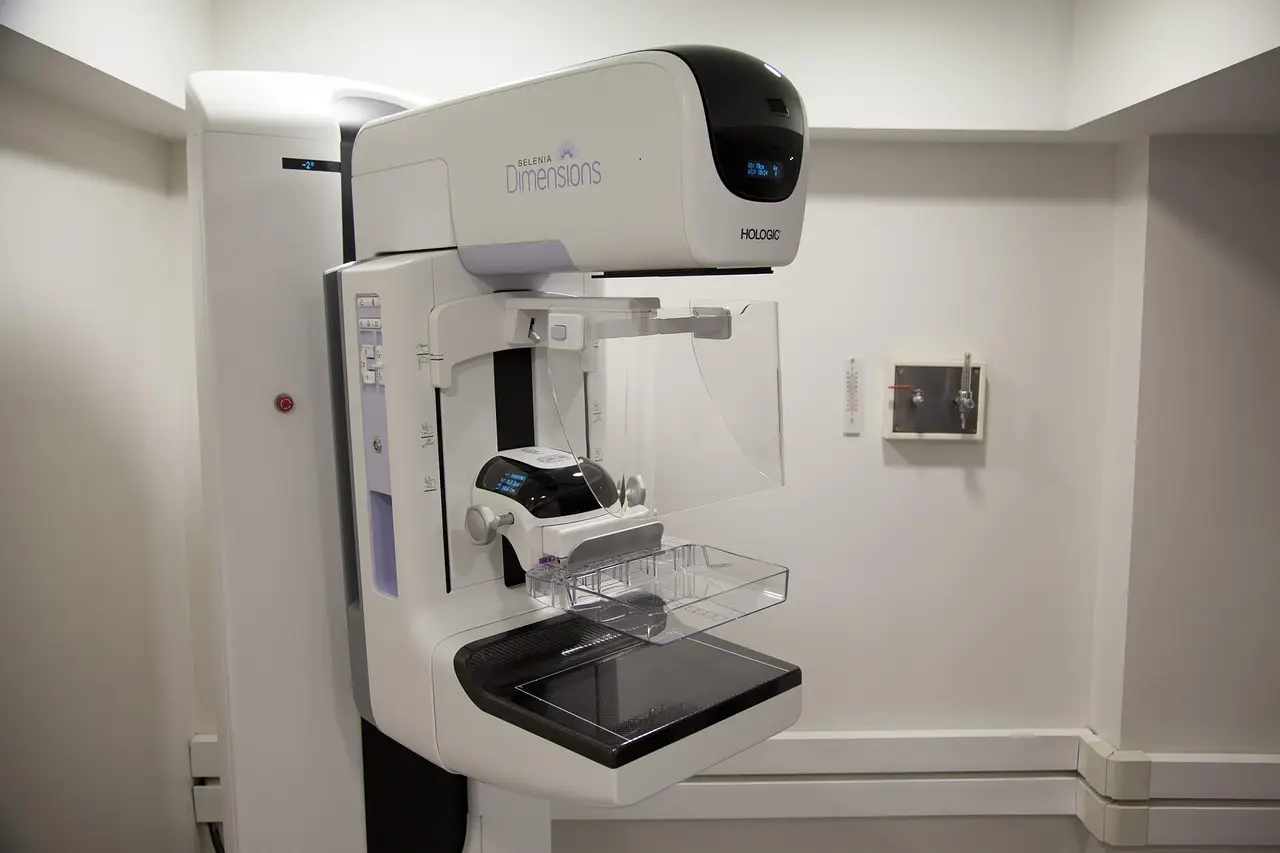
The FDA cleared DeepHealth's Mammo Risk on 23 November, and the software now estimates a woman's breast cancer risk at three, four, or five years out from a routine 3D mammogram. No extra scan. No questionnaire. The RadNet subsidiary announced the clearance in a press release Tuesday, and the product is already on sale to US providers, running across systems from several vendors.
DeepHealth claims a first: no other FDA-cleared tool predicts breast cancer risk from 3D mammogram images. Coverage extends to combined 3D and 2D workflows. The company cites FDA figures showing 3D mammography is available at more than 90% of US mammography facilities, which puts the addressable installed base near-universal.
What does the clearance actually cover?
Mammo Risk does not detect tumours. DeepHealth sells a separate detection product, Mammo Dx, for that. Risk prediction targets women whose scans show no cancer signs but whose five-year risk may still run high. Providers can then adjust screening, offering supplemental imaging.
Niccolò Stefani, business and product leader for clinical AI at DeepHealth, frames the shift plainly: "By launching the world's first and only image-based risk assessment software for 3D mammography, we are moving beyond just detecting cancer towards enabling preventive pathways."
The model was trained on 220,000 studies and reads risk from the mammogram itself, replacing the long questionnaires and clinical data that traditional risk models demand. American Cancer Society figures cited in the release put this year's US invasive breast cancer cases at about 321,910 — the population this triage layer aims to refine.
Takeaway: this is risk stratification software, not a diagnostic, and it slots into the screening pathway rather than replacing any read.
How strong is the evidence?
An independent multicentre study covered more than 65,000 screening mammograms across 10 US clinical sites and showed "strong predictive performance," according to DeepHealth. Results held across subgroups, including Black women and women with dense breasts — two groups with historically poorer outcomes and less accurate results under traditional models.
The release cites the study to FDA clearance file K262709 but gives no accuracy figures. That gap matters for anyone signing a purchase order; the numbers exist, and you can request them.
There's a lineage here. An earlier DeepHealth model, predicting risk up to two years ahead, carries a CE mark and sells in Europe. Karolinska Institutet researchers led a 2022 study of it in Science Translational Medicine, drawing on more than 154,000 US women screened with 3D mammography. For the 12% of women at highest risk, that model showed roughly 2.4 times the sensitivity of the traditional Tyrer-Cuzick model.
Takeaway: subgroup consistency is the headline claim, and the 2.4× sensitivity figure from the predecessor model is the closest published anchor.
Who pays, and when?
The American Medical Association has established a Category III billing code for image-based breast cancer risk tools, effective 1 January 2027. It tracks usage frequency and gathers evidence that may inform future payment decisions — a tracking code, not reimbursement. Mammo Risk will join RadNet's own screening programmes in the coming months.
Victoria Smart, senior vice president of mission at Susan G. Komen, puts the use case in context: "Everyone's biology and breast cancer risk are different, yet too often we take a one-size-fits-all approach to screening and care. Better approaches have been long overdue."
DeepHealth will show the software at RSNA in Chicago, 29 November to 2 December, with a 2 December talk presenting a study of its image-only risk model.
Takeaway: no revenue code until 2027 at the earliest; adoption before then rides on provider economics, not payer coverage.
Where does the competitive field stand?
In Europe, Berlin's Vara won a CE mark in September for AI that clears normal mammograms without a radiologist. French startup Raidium's AI radiology viewer is in use at Moffitt Cancer Center. Mass General Brigham spinout Aevius raised $22m for clinical AI this week.
Takeaway: image-based breast AI is crowding fast, but Mammo Risk holds the only FDA 510(k) position in risk prediction from 3D tomosynthesis — for now.
Source: Google News: AI in medicine
More from Elena Vasquez
Show full bio
Senior reporter covering people, launches and day-to-day practice in Doctors' Insider is a professional daily at Doctors' Insider.
68 articles
Related articles
- FDA clears RadNet's Mammo Risk for 3D mammography
- FDA clears Mammo Risk for three- to five-year breast risk via DBT
- NHS launches world's largest AI breast screening trial: 700,000 women
- Texas Oncology Lifts Biomarker Testing to 90% — Panels Say Equity Still Hangs on Systems
- FDA clears GE HealthCare AI for feeding-tube placement assessment