VAX-31 Hits All Phase 3 Endpoints, Setting Up 2028 BLA
VAX-31 met all primary endpoints in the phase 3 OPUS-1 trial across 4,047 adults, showing noninferiority on 28 shared serotypes and superiority on 3 unique ones, with a BLA planned for 2028.
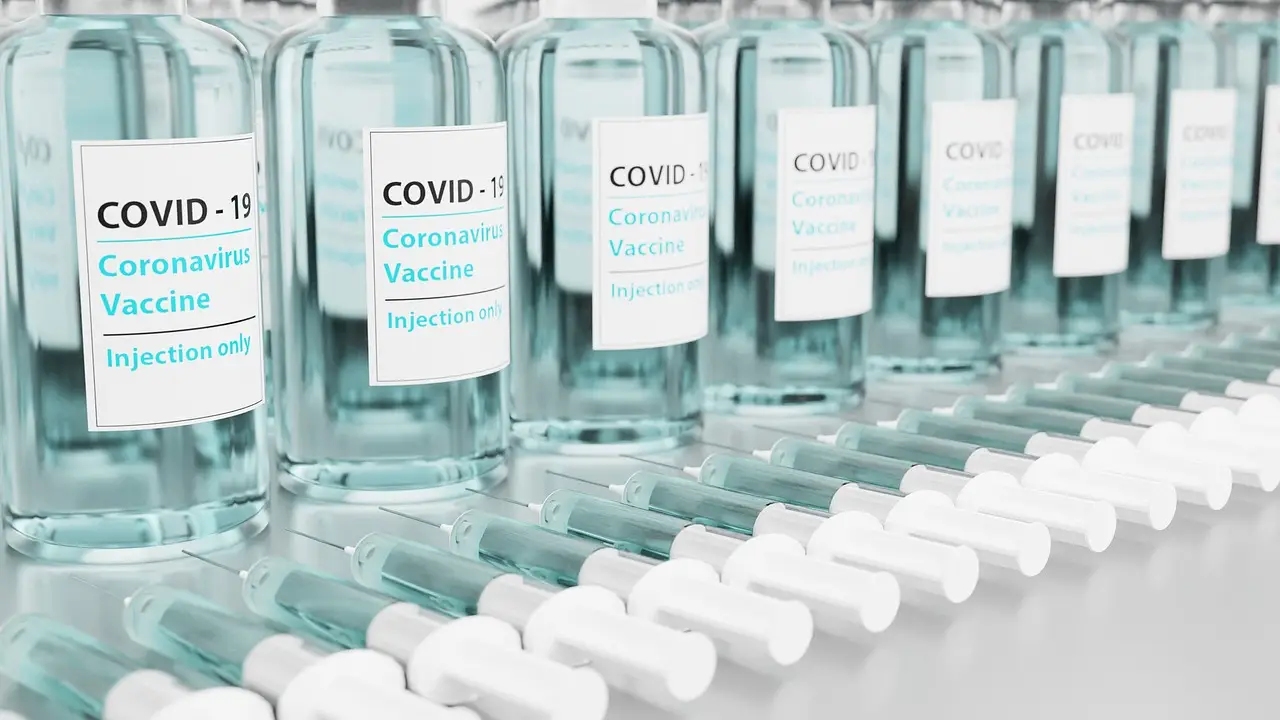
Vaxcyte's 31-valent pneumococcal conjugate candidate VAX-31 met every prespecified primary endpoint in the phase 3 OPUS-1 trial, clearing the statistical bar on all 32 serotype comparisons and setting the company on course for a Biologics License Application submission in 2028.
The trial enrolled 4,047 adults across roughly 30 US sites and tested a high-dose formulation: 3.3 µg per serotype, with 4.4 µg for serotypes 1, 5 and 22F. The design is not timid. Neither are the results.
What did OPUS-1 actually show?
In adults aged 50 and older, VAX-31 achieved statistical noninferiority for all 28 serotypes shared with Prevnar 20 (PCV20) and/or Capvaxive (PCV21), under a threshold requiring the lower bound of the 95% confidence interval to exceed 0.667. The candidate also demonstrated statistical superiority for its three unique serotypes — 2, 7C and 20C — plus the cross-reactive serotype 20B.
The trial satisfied its primary immunobridging endpoint across all 32 serotype comparisons when researchers compared adults aged 18–49 against adults aged 50–64, which supports extrapolating the adult indication across the full age range. In head-to-head analyses, VAX-31 matched PCV20 on 20 of 20 shared serotypes and PCV21 on 17 of 19; the remaining two serotypes, 3 and 12F, met historical noninferiority thresholds.
That benchmark matters beyond arithmetic. Noninferiority at the 0.667 threshold addresses carrier suppression, the phenomenon in which stacking additional capsular antigens onto a traditional conjugate platform dilutes antibody responses. Vaxcyte credits its site-specific, carrier-sparing chemistry for dodging it.
"We believe these positive OPUS-1 results provide clinical validation of our site-specific, carrier-sparing platform's potential to deliver broader-spectrum pneumococcal vaccines while maintaining the magnitude of immune responses," said Grant Pickering, CEO and co-founder of Vaxcyte. "VAX-31 met all prespecified primary immunogenicity endpoints across all age groups studied in this pivotal phase 3 trial, providing the clinical cornerstone for our planned Biologics License Application."
How safe was the high-dose formulation?
Safety data showed VAX-31 was well tolerated, with a profile comparable to PCV20 and PCV21. Reactogenicity ran mostly mild to moderate, local and systemic, and typically resolved within 48 hours. For a formulation carrying more than 30 conjugates at elevated antigen loads, that is the outcome manufacturers hope for and regulators expect to see documented.
Why the serotype math matters
Current adult vaccines force a trade-off. PCV20 retains coverage of historically prevalent strains such as serotypes 4 and 19F; PCV21 tilts toward strains dominating recent adult invasive pneumococcal disease. VAX-31 collapses the trade-off into one syringe, combining circulating and historical strains. Vaxcyte reports the candidate targets serotypes responsible for roughly 86.7% of adult nonbacteremic pneumonia and 93.9% of adult IPD.
The epidemiological stakes are concrete. Modeling studies indicate PCV31 could prevent the highest annual burden of pneumococcal disease among pipeline candidates, against a pathogen responsible for 225,000 adult pneumonia hospitalizations annually in the US.
What comes next?
Vaxcyte has completed enrollment in OPUS-2, which evaluates concomitant administration of VAX-31 with a seasonal influenza vaccine in 1,300 adults. The company plans to report OPUS-2 and OPUS-3 data in the first half of 2027, followed by a manufacturing consistency study, with a BLA submission planned for 2028.
"We believe VAX-31's combination of broader coverage and robust immune responses, demonstrated in a trial inaugurating a more stringent noninferiority standard, sets a new benchmark for the class and gives us confidence in its potential for approval," Pickering concluded.
How does the competitive field look?
Pfizer is not standing still. The company recently reported phase 2 data for PCV25, its 25-valent pediatric candidate, which generated a 15-fold increase in serotype 3 antibody titers relative to Prevnar 20 in infants. Serotype 3, with its thick capsular membrane and mucoid character, has long blunted vaccine responses, so the figure carries real weight for pediatric pneumonia and empyema prevention. PCV25 is projected to cover up to 90% of pediatric invasive strains.
For clinicians and pharmacists, the operational implications arrive before the BLA does. Higher-valency candidates will require working fluency in serotype coverage profiles, administration schedules and evolving ACIP guidance, particularly as federal policy shifts toward shared clinical decision-making frameworks. Pharmacists, through EHR prompts, routine immunization screening and patient counseling, remain the primary engine of uptake. The class is getting broader. The counseling burden is getting heavier.
Source: Drug Topics
More from Amara Osei
Show full bio
Correspondent covering money, funding and market shifts around Doctors' Insider is a professional daily at Doctors' Insider.
60 articles
Related articles
- AbbVie's Rinvoq Becomes First FDA-Approved Systemic Therapy for Vitiligo
- mNEXSPIKE Cut COVID-19 Risk 35.9% vs Comirnaty in VA Veterans 65+
- FDA Approves Secukinumab 150 mg for Polymyalgia Rheumatica
- Blinded RENEW data show FVC gains in 8 of 24 IPF patients
- Bepirovirsen’s roughly 1-in-5 cure odds reshape hepatitis B workflows