Quantitative microbiome profiling separates robust MS markers from noise
Belgian researchers using quantitative bacterial counting and transit correction identified MS-robust gut microbiome markers, explaining why earlier MS microbiome studies conflicted. Associations, not causal proof.
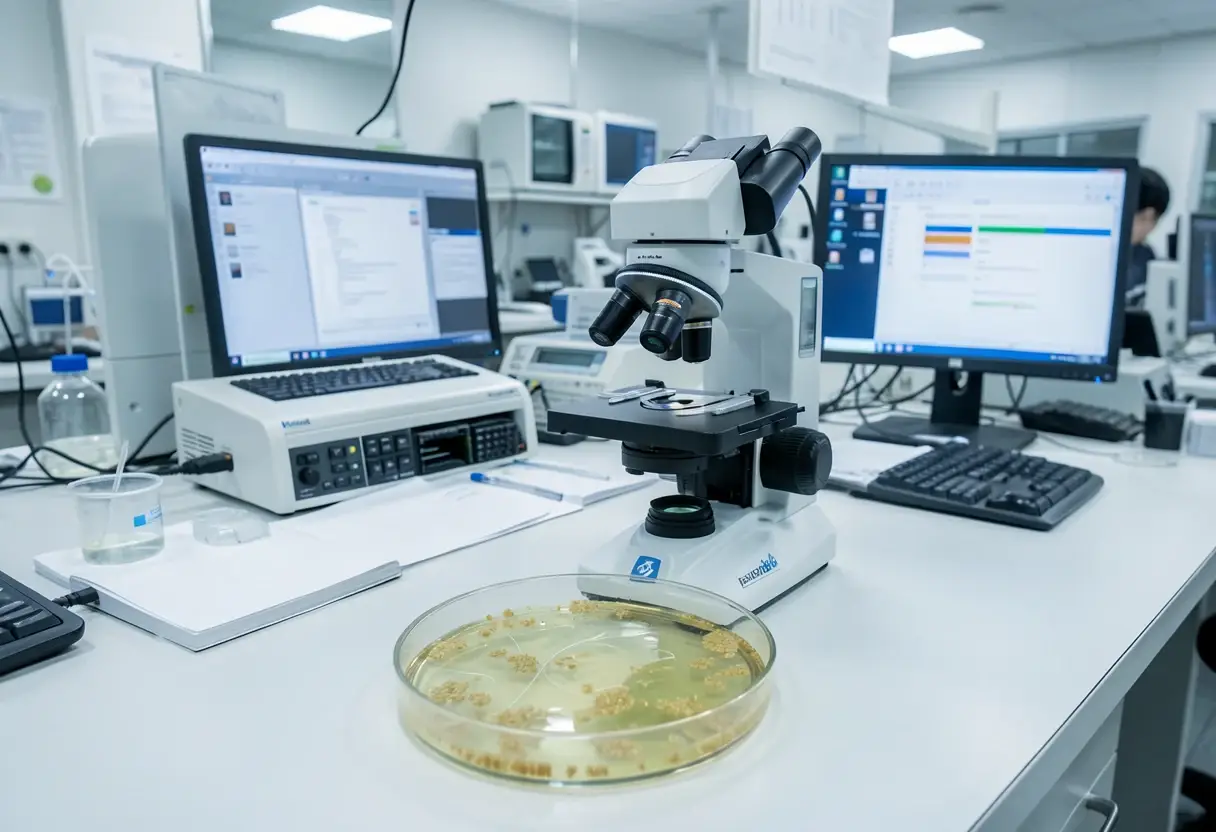
Deconfounded, quantitative microbiome profiling has identified bacterial species that are robustly associated with multiple sclerosis — and, just as important, has explained why a decade of smaller studies kept contradicting itself. The work comes from researchers at the Vrije Universiteit Brussel (VUB), the Flemish Institute for Biotechnology (VIB), KU Leuven and the Belgian National MS Centre in Melsbroek, and appeared in the journal Gut Microbes in 2026 (DOI: 10.1080/19490976.2026.2681876).
Ayla Pauwels, a neurologist at VUB and lead author of the study, opened the case plainly. "Instead of just looking at the ratios between bacteria, it is better to actually count the cells," Pauwels said. "We have also observed that people with MS have, on average, a lower moisture content in their stool samples, indicating slower bowel transit, which must be taken into account."
Why did earlier MS microbiome studies disagree?
MS is a common chronic disorder of the central nervous system with an unpredictable course. Previous studies consistently reported differences in gut microbiota composition between people with and without MS, but the results often contradicted one another.
The Belgian team identified two likely reasons. First, earlier studies did not always account for confounding factors that shape gut microbiota — most notably gut transit, the speed at which food passes through the intestine. Second, the researchers moved from relative abundance to absolute bacterial counts, a method that filters out additional noise from the data.
After adjusting for these factors, a clearer pattern emerged. Some bacterial species were more common in people with MS than in the general population; others appeared less frequently. The team then benchmarked its findings against international studies. Some bacterial groups held up as reliable markers of MS. Others did not survive the comparison.
What did the adjusted analysis show?
Two clinical signals stood out.
- Certain "good" bacteria, which may exert an anti-inflammatory effect, were less abundant in people with MS.
- A specific bacterial profile was linked to a milder course of the disease.
Lindsay Devolder of VIB-KU Leuven, co-first author of the study, framed the methodological point. "By taking confounding factors into account more effectively, we were able to distinguish which differences in the gut microbiota are truly robustly associated with MS," Devolder said. "This helps us to better understand conflicting findings from previous studies and provides us with a more reliable basis for further research into the role of the microbiome in MS."
Should clinicians act on this now?
No. The authors are explicit that these are associations, and further research is needed before anyone can claim a cause-and-effect relationship between the microbiome and MS pathology.
"Patients shouldn't all rush to the pharmacy for probiotics just yet," the researchers warn. The findings do, however, support the growing understanding that general health factors — a varied diet rich in whole-grain products, and avoidance of ultraprocessed foods — can positively influence gut flora and overall health in people with MS.
For clinicians managing MS, the practical read is narrow: no diagnostic or therapeutic microbiome tool yet, but a cleaner evidence base on which the next wave of trials can build. The study's lasting contribution may be methodological. Quantitative counting, plus correction for stool moisture and transit, turns a contradictory literature into a set of markers that replicate across cohorts.
Source: Medical Xpress
More from Grace Kim
Show full bio
Market editor covering money, funding and market shifts around Doctors' Insider is a professional daily at Doctors' Insider.
61 articles
Related articles
- Cefiderocol holds activity against resistant Pseudomonas VAP
- FIT cutoff of 10 fails younger patients: 1-in-300 yield under 50
- Malawi genome study maps resistant E. coli between households
- IBD Raises Cirrhosis Risk 51%, Driven by Ulcerative Colitis
- Cilta-cel enterocolitis tied to 100-fold CAR T persistence