3D-Printed Tumoroids Plus AI Flag Drug Responses Molecular Tests Miss
UC Davis and VA researchers grow 3D-printed patient tumoroids and pair them with an AI platform, testing drugs ex vivo across 50+ prostate and 60 bladder cancer cases.
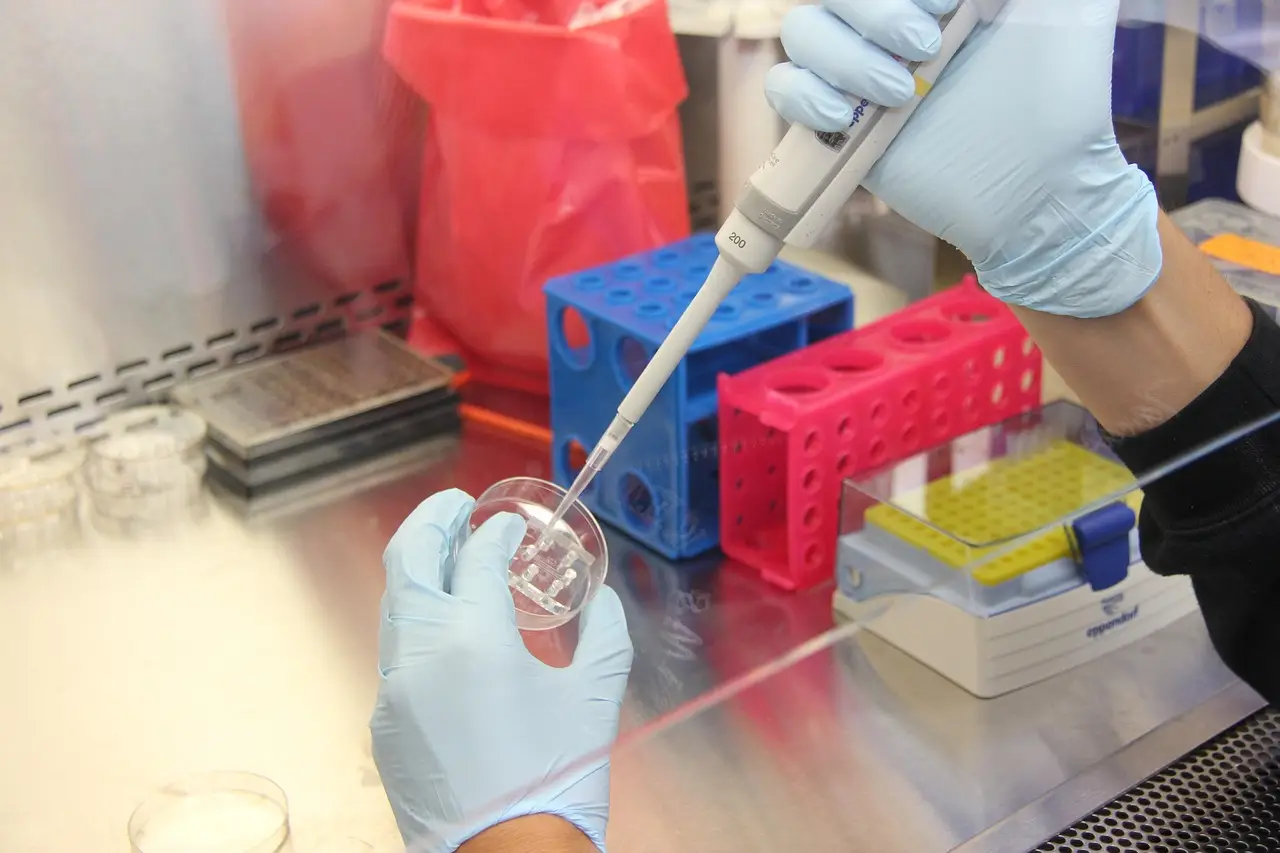
More than 50 prostate cancer cases and nearly 60 bladder cancer cases have already run through a UC Davis Health platform that tests drugs on 3D-printed, patient-derived miniature tumors before the patient receives anything. The project, led by Christopher A. Lucchesi of the UC Davis Department of Urology together with the U.S. Department of Veterans Affairs in Mather, California, aims to solve a familiar clinical problem: two patients with the same diagnosis can respond very differently to the same therapy.
Lucchesi, an assistant professor of urologic surgery and a research health scientist at the VA, has a personal stake in the question. "I'm a cancer survivor myself. I understand how it feels to have chemotherapy, radiation and all that," he said. "I was fortunate that treatment worked for me, but for a lot of patients, frontline therapy does not work. Even second-line therapy might not work."
How the tumoroids are built
The workflow starts with tissue taken during surgery or biopsy. The team dissociates that tissue into individual cells, then uses a specialized 3D printer to deposit tiny droplets containing the patient's tumor cells into a bioink (a hydrogel that supports living cells). The resulting microscopic, three-dimensional models are called tumoroids.
"The easiest way to explain the concept is that it's your actual primary tumor, just miniaturized," Lucchesi said.
The practical advantage is exposure-free screening. "We can actually test the therapeutics ex vivo, or outside of your body, before you actually are treated with anything," he said. Researchers can evaluate many different therapies, and combinations of therapies, against a patient's tumoroids — testing the candidate keys before trying one in the patient.
What does the AI layer add?
Tumoroid culture alone is not the whole platform. Lucchesi's team developed an artificial intelligence–powered research system that analyzes multiple forms of patient data and nominates promising treatments to try on the tumoroids.
"This is unique because we actually take the AI path and look at the biological systems inside the tumor, come up with different treatment strategies, and then test them on the tumoroids—all before the patient ever gets treated," Lucchesi said.
The sequence matters. The AI proposes; the functional model disposes. Neither molecular profiling nor prediction alone matched what the tumoroids actually did.
Functional testing against molecular prediction
The findings so far reinforce the limits of molecular data. Cancers that look similar on paper do not always behave the same way in the lab, and molecular findings alone do not tell the whole story of treatment response.
"Something striking is that every single patient sample we've had responds to drugs completely differently," Lucchesi said. "We are able to examine whether a treatment kills the cancer, how the patient's own immune cells respond and whether we can use their original biopsy to predict which treatments are most likely to work."
Some results ran directly against molecular expectations. "We've had a handful of patients whose tumors weren't expected to respond to certain drugs, but when we tested the tumor, it responded to those drugs anyway," he said. "The tumoroids gave us information we wouldn't have had otherwise."
What does this change for oncology practice?
Right now, nothing on the ward. The platform remains under active development, and the team hopes to eventually begin clinical trials. The current case volume also covers more than prostate and bladder: kidney, lung, liver and head and neck tumors have been evaluated as well.
The end goal, in Lucchesi's framing, is first-try accuracy. "Because we could potentially get patients treated with the correct drug on the first try, saving money and time," he said. "Time matters for cancer patients."
For clinicians, the story is worth tracking for two reasons. First, it supplies functional evidence that molecular stratification misses drug sensitivity in at least some tumors. Second, if clinical trials validate the ex vivo approach, it could shift selection of frontline and second-line therapy from population-level inference toward patient-specific response data.
Until then, the tumoroids stay in the lab, and treatment decisions keep running on scans, lab tests and decades of clinical research — the same evidence base that modern cancer care already uses.
Source: Medical Xpress
More from James Calloway
Show full bio
News editor covering regulation, policy and their impact on Doctors' Insider is a professional daily at Doctors' Insider.
68 articles
Related articles
- 77% Fewer ED Visits: Reimagine Care's Triage Model Reaches PCOC
- Oral tebipenem noninferior to IV therapy; UTI discharge remains blocked
- St. Jude pipeline yields 135 pediatric tumor organoids, 20 new cell lines
- Texas Oncology Lifts Biomarker Testing to 90% — Panels Say Equity Still Hangs on Systems
- Pan-RAS glue ERAS-0015 shrinks 44% of pancreatic tumors in Phase I