FDA clears Igalmi for at-home use; COMP360 seeks depression approval
The FDA approved at-home Igalmi for agitation in schizophrenia and bipolar disorder. A 222-patient deuterated psilocin trial delivered a 7.6-point MADRS advantage.
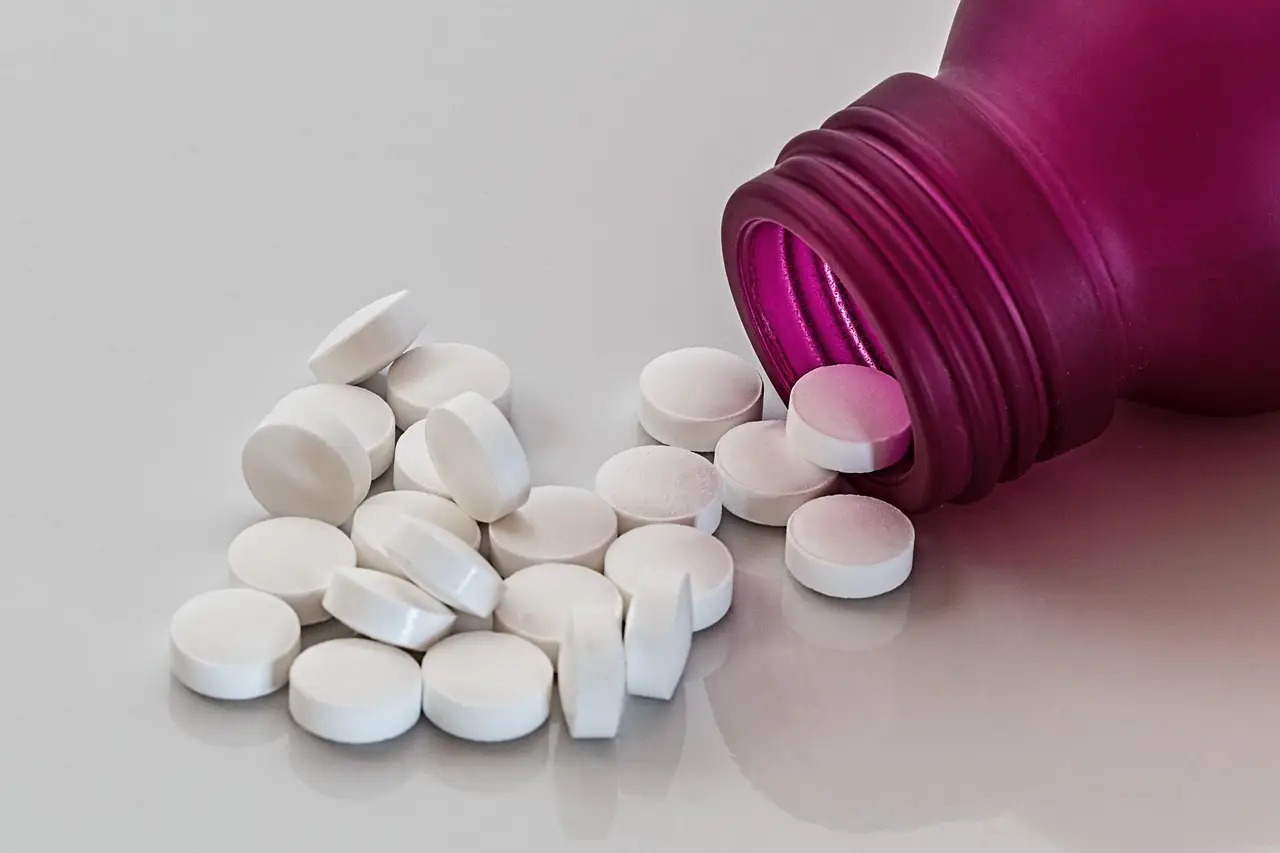
The US Food and Drug Administration approved Igalmi (dexmedetomidine) sublingual film on November 16, 2026, as the first at-home acute treatment for agitation in schizophrenia, schizoaffective disorder, and bipolar I or II disorder. Before the decision, clinicians could use the product only in supervised settings.
Evidence came from the 12-week, randomized, double-blind, placebo-controlled phase 3 SERENITY At-Home trial. The study enrolled 102 patients and 1,160 treated agitation episodes, meeting its primary endpoint of at-home safety and tolerability.
What changes with at-home Igalmi?
Somnolence, dry mouth, dizziness, and oral paresthesia or hypoesthesia were common adverse events, defined in the label as occurring in at least 5% of patients and more often than with placebo. Labeling also warns about hypotension, orthostatic hypotension and bradycardia, plus interactions with blood-pressure or heart medicines, sedatives and opioids.
Does adjunctive HLP003 separate from placebo?
Helus Pharma reported on November 16 that its deuterated psilocin HLP003, added to a stable antidepressant, met the primary endpoint in the phase 3 APPROACH trial. The study enrolled 222 adults with moderate-to-severe major depressive disorder, allocating 112 to HLP003 and 110 to placebo.
At week 6, MADRS scores fell 19.5 points with HLP003 and 11.9 with placebo, a placebo-adjusted difference of 7.6 points (P<0.0001). The separation appeared by day 2 at 5.0 points and persisted at week 12 at 7.0 points.
Week 6 response favored HLP003 at 56.3% versus 28.2%, and remission reached 50.9% versus 18.2%. Most adverse events were mild to moderate and confined to dosing day, although 3 treatment-related serious adverse events occurred.
Where does COMP360 stand with FDA?
On November 9, Compass Pathways completed an NDA to the FDA for COMP360, a synthetic psilocybin formulation, in treatment-resistant depression. The application rests on 2 phase 3 trials and 1 phase 2b study with more than 1,000 participants combined; the company reported that all 3 met their primary endpoints.
COMP360 holds a National Priority Voucher and rolling review, which could shorten the FDA timeline. Compass Pathways cautioned that neither mechanism “guarantees faster review or approval.” Because the drug remains a Schedule I controlled substance, the DEA and individual states would need to reschedule it before commercialization. Approval and the timing of subsequent decisions remain uncertain.
Has the FDA voucher program stalled?
Reuters reported on November 12 that the FDA had shelved the Commissioner’s National Priority Voucher program, launched in June 2025 under former Commissioner Marty Makary. The FDA had issued no new vouchers since Makary left in May, and the political-appointee council overseeing reviews had gone dormant.
Of 22 drugs awarded vouchers, about a dozen had been approved, some 8 or more months sooner than standard review. Reuters reported that sponsors could keep submitting, but that applications would not advance; an HHS spokesperson said: “The pilot is ongoing.”
Nine drugs remain in the program:
- COMP360 for treatment-resistant depression.
- PSIL201 (psilocybin) for major depressive disorder.
- TSND-201 (methylone) for posttraumatic stress disorder.
Two sources said FDA career scientists had resumed oversight of their review timelines.
Does roluperidone separate on negative symptoms?
At a Minerva Neurosciences-hosted review on November 12, investigators presented roluperidone, an investigational schizophrenia agent for negative symptoms without direct dopamine blockade. Investigators attributed its activity to 5-HT2A antagonism, sigma-2 receptor activity and alpha-1 adrenergic activity.
In the phase 2b MIN-101C03 study, the 64 mg dose separated from placebo on the Marder negative symptom factor score; the phase 3 MIN-101C07 produced a smaller separation. Personal and Social Performance scale scores improved versus placebo in both studies.
The sponsor’s presentation reported improvement in primary negative symptoms versus placebo (P=0.03), but no difference in secondary negative symptoms (P=0.61). About 38% of roluperidone patients versus about 22% of placebo patients achieved at least a 20% negative-symptom improvement, with numbers needed to treat of 7, 8 and 9 across responder analyses.
Presenters said the target population, defined by high negative and low positive symptoms, carries lower relapse risk regardless of treatment.
Across the week, efficacy signals arrived with safety findings, access constraints and unresolved review timelines.
Original: via.ritzau.dk
More from Grace Kim
Show full bio
Market editor covering money, funding and market shifts around Doctors' Insider is a professional daily at Doctors' Insider.
62 articles
Related articles
- FDA Clears At-Home Dexmedetomidine Film for Acute Agitation
- FDA Clears Igalmi for At-Home Agitation Treatment in Schizophrenia, Bipolar Disorder
- FDA Decision on At-Home Igalmi Set for November 14, 2026
- FDA Clears At-Home Dexmedetomidine for Acute Agitation in Schizophrenia, Bipolar Disorder
- Deuterated Psilocin HLP003 Hits Phase 3 Primary Endpoint in MDD