Blood Test Matches CSF Assays in Alzheimer's Diagnosis at 90% Accuracy
Lund University researchers show a regulator-approved p-tau217 plasma assay matches CSF testing at ≥90% accuracy across three cohorts, with PET as reference standard.
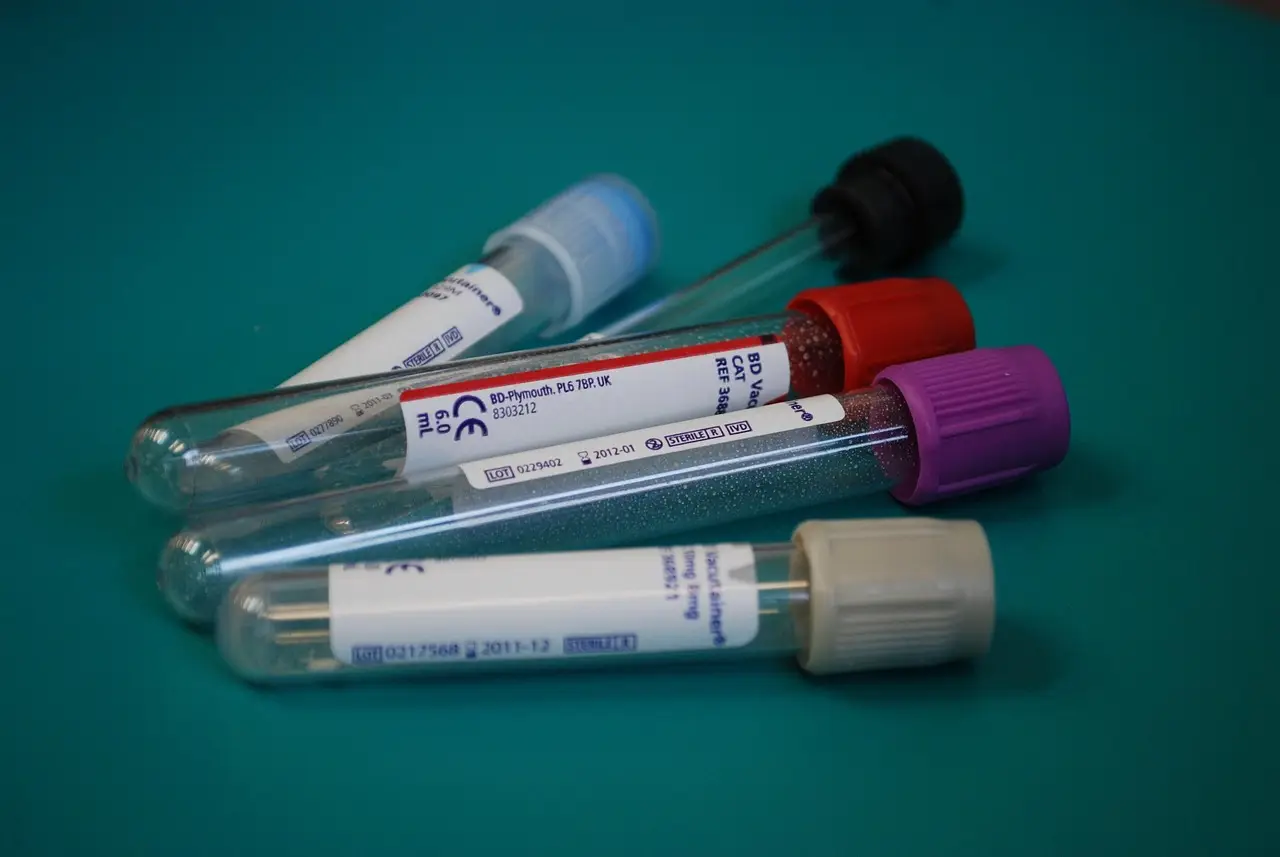
A plasma p-tau217 blood test detected Alzheimer's disease pathology with at least 90% accuracy, matching the cerebrospinal fluid (CSF) assays that have long served as the diagnostic standard, according to a new study from Lund University published in Nature Aging. The test already carries FDA approval and CE marking for clinical use in Europe, the U.S. and Japan, among other markets.
"It is the first time this has been demonstrated," said Noëlle Warmenhoven, a doctoral student in Lund University's Clinical Memory Research Unit. The study is the first to show the assay performs on par with CSF testing using cutoff values that directly reflect clinical practice rather than study-specific thresholds. PET imaging served as the reference standard to verify accuracy.
What does the study change for clinicians?
The findings directly challenge a widespread assumption in the field. "Previous studies have used cerebrospinal fluid tests as a reference standard. Based on those articles, there are many clinicians that therefore believe the new blood tests are good, but probably not as good as the cerebrospinal fluid tests we already use. However, the findings of this new study contradict this and suggest that a blood test is just as accurate as cerebrospinal fluid testing," said Sebastian Palmqvist, associate professor and senior lecturer in neurology at Lund University and senior consultant at the Memory Clinic, Skåne University Hospital.
The performance equivalence held across three cohorts:
- an American research cohort,
- a Swedish memory clinic cohort,
- a Swedish primary care cohort.
The takeaway: the plasma assay is not a compromise option — it delivers CSF-level accuracy in the settings where it is used.
Why the cutoff design matters
A central feature of the study is its use of regulator-approved, predefined cutoff values to classify results as positive, inconclusive or negative. Earlier research often calculated cutoffs optimized for the specific study population, a method that does not transfer reliably to practice.
"For example, you could establish a cutoff that perfectly distinguishes between people with and without Alzheimer's disease in Study A. But, if the same cutoff is then used in Study B, where the proportion of people without Alzheimer's is significantly higher, this could lead to many false-positive results," Warmenhoven said.
Predefined cutoffs are built for broad clinical applicability and are the values physicians will actually use at the bench. Manufacturers can now supply them alongside the approved test, replacing the ad-hoc thresholds of the research-only era.
p-tau217 alone versus the combination assay
The test measures p-tau217, a protein biomarker specific to Alzheimer's disease. The U.S.-approved version measures p-tau217 in combination with Aβ42 (amyloid-beta 42), a protein that accumulates in the brain and forms plaques in Alzheimer's patients.
The Lund group has previously shown — and demonstrates again in this study — that the combination does not necessarily outperform p-tau217 alone. The takeaway: the simpler single-marker assay suffices.
Where the test fits in the diagnostic pathway
The test returns a positive, negative or inconclusive result; inconclusive cases may require confirmation by PET scan or CSF testing. The patient must have cognitive symptoms — the assay is not indicated for asymptomatic individuals.
That limitation frames the current recommendation. Palmqvist noted the test is currently recommended only in memory clinics and other specialist units, not primary care. The gap is consequential: one in five women and one in 10 men develop Alzheimer's during their lifetime, yet specialized clinics hold most of the advanced diagnostic tools, including PET and CSF testing, while primary care lacks quick, simple methods.
"However, work is currently underway to determine what implementation in primary care might look like. Further down the line, it may also become relevant to screen people with no memory problems at all, should drug treatments prove effective at that stage," Palmqvist said.
The takeaway: primary-care rollout is the next implementation question, with asymptomatic screening contingent on effective early-stage therapy.
Publication
Warmenhoven, N. et al., "Comparing plasma p-tau217 and plasma p-tau217/Aβ42 with CSF biomarkers for assessing Alzheimer's disease pathology," Nature Aging (2026). DOI: 10.1038/s43587-026-01259-z.
In many cases, patients may now avoid the lumbar puncture entirely.
Source: Medical Xpress
More from Marcus Bennett
Show full bio
Staff writer covering companies, deals and strategy in Doctors' Insider is a professional daily at Doctors' Insider.
64 articles
Related articles
- eMTBR-tau blood marker tracks advanced CTE; MIPS review deadline Nov. 30
- All Five Readers Clear Endpoints in Phase 3 Trials of Tau PET Tracer Florquinitau F 18
- Real-World Lecanemab Data Cut Dementia Progression Risk 76% at 3 Years
- Diranersen Slows Alzheimer's Decline 38% at Two Years in CELIA
- AR1001 Slows Decline 31% in Monotherapy Population, Misses Overall