All Five Readers Clear Endpoints in Phase 3 Trials of Tau PET Tracer Florquinitau F 18
All 5 readers met coprimary endpoints in both phase 3 studies of Lantheus' tau PET tracer florquinitau F 18 (Tauklarify), with majority-read sensitivity up to 87.8% and specificity up to 99.4%.
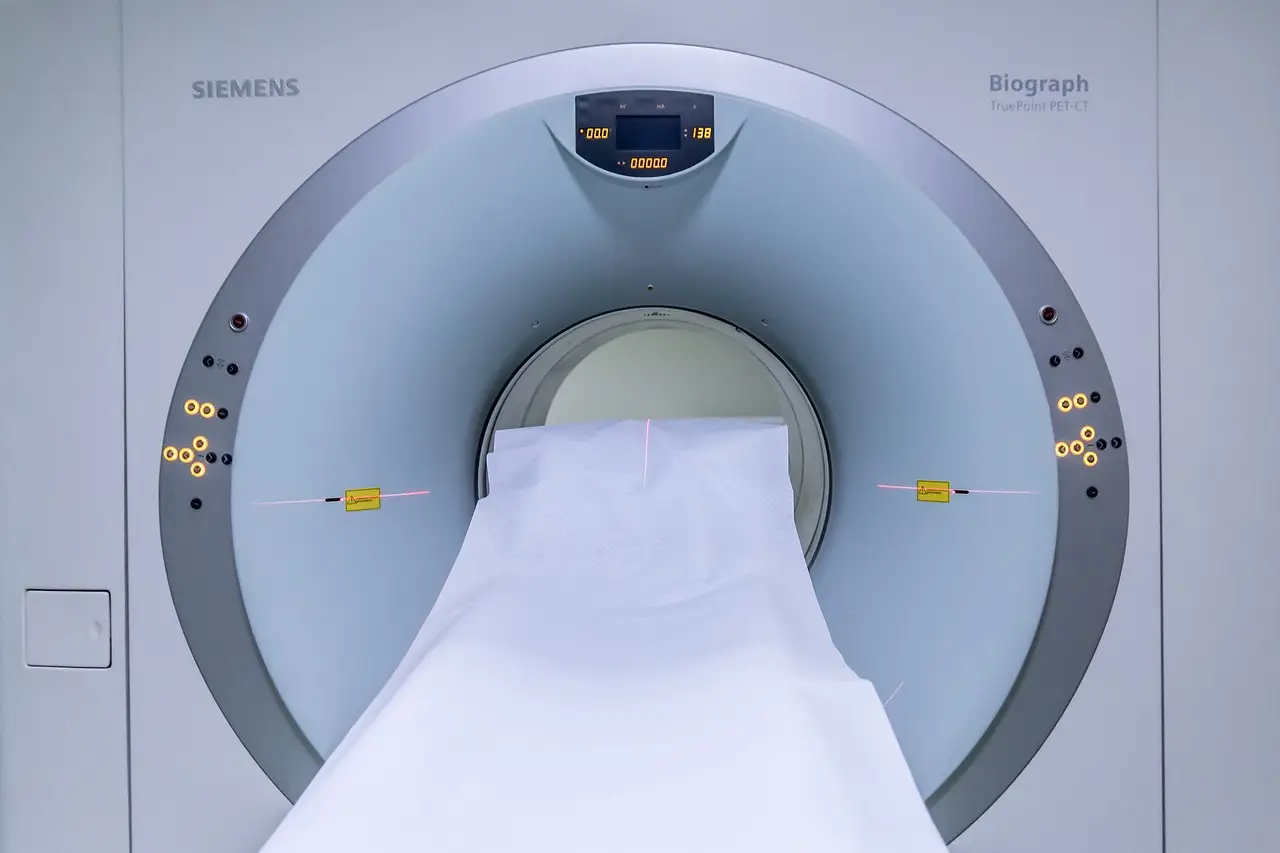
All 5 independent readers met prespecified sensitivity and specificity endpoints in both pivotal phase 3 studies of florquinitau F 18 injection (Tauklarify), Lantheus Holdings announced at the Clinical Trials on Alzheimer's Disease (CTAD) 2026 meeting in Boston, Massachusetts. The data underpin the tracer's FDA-approved indication, and the results hold in patients with early symptomatic Alzheimer disease.
Florquinitau F 18, also known as MK-6240, is a fluorine 18–labeled radiotracer that binds aggregated tau, allowing PET visualization of neurofibrillary tangle (NFT) pathology. It is indicated for brain PET in adults with cognitive impairment under evaluation for Alzheimer disease. Safety and effectiveness have not been established for non-Alzheimer tauopathies.
How were the studies designed?
The 2 studies pooled 617 florquinitau F 18 PET scans from 3 established prospective Alzheimer disease cohorts. To capture early symptomatic disease, investigators used a prospectively defined clinical and radiographic reference standard informed by neuropathologic evidence rather than autopsy confirmation alone. Amyloid beta PET–positive individuals with cognitive impairment were classified as tau-positive; age-matched amyloid beta–negative, cognitively normal individuals were classified as tau-negative.
Success required at least 3 of 5 readers to show a lower bound of the 95% CI above 60% for both sensitivity and specificity. Every reader cleared that bar in both studies. In short, the tracer performed above threshold across the board.
What did the numbers show?
- Study CE-20-01 (N=279): reader sensitivity 79.9%–88.5%, specificity 97.9%–99.3%; majority-read sensitivity 87.8%, specificity 98.6%, PPV 98.4%, NPV 89.0%.
- Study CE-23-01 (N=338): reader sensitivity 68.2%–82.4%, specificity 93.5%–99.4%; majority-read sensitivity 78.8%, specificity 99.4%, PPV 99.3%, NPV 82.3%.
- Inter-reader agreement was high, with generalized Fleiss κ of 0.92 in CE-20-01 and 0.86 in CE-23-01.
What about safety?
A pooled analysis of 1734 participants from the US POINTER and AIBL studies who received at least 1 dose found the tracer generally well tolerated. Treatment-emergent adverse events were uncommon: headache (0.7%), nausea (0.2%), dizziness (0.1%), injection site reactions (0.1%), and abdominal discomfort (0.1%). There are no contraindications. Like other radiopharmaceuticals, the agent adds to long-term cumulative radiation exposure.
What did the investigators say?
"Tau neurofibrillary tangles are among the pathological features most closely associated with cognitive decline and prognosis in Alzheimer disease, making their reliable detection especially important in earlier clinical stages," said Christopher Rowe, MD BMBS, FRACP, FAANMS, director of Molecular Imaging Research at Austin Health and presenting author. "These findings may give clinicians a clearer view of disease progression at a time when that information may be particularly valuable."
Ludger Dinkelborg, PhD, head of research and development at Lantheus, highlighted the reference standard: "What makes these studies particularly noteworthy is the use of a prospectively defined clinical radiological reference standard informed by extensive neuropathological evidence." He added that tau imaging alongside amyloid beta imaging may provide complementary insights for characterizing Alzheimer disease.
What are the prescribing caveats?
The label carries a misdiagnosis warning. Diagnostic performance was established in groups expected to have either mostly no tau pathology or mostly clinically significant tau pathology, so performance may be lower at earlier stages of the pathological spectrum. A negative scan does not exclude NFT pathology, and a positive scan does not confirm it; additional evaluation is advised when clinical uncertainty remains.
Florquinitau F 18 joins flortaucipir F 18 (Tauvid), FDA-approved in 2020, as the second tau PET option for evaluating patients with cognitive impairment. Clinicians now have two approved tracers; the difference is validated performance in early symptomatic disease.
Original: globenewswire.com
More from Marcus Bennett
Show full bio
Staff writer covering companies, deals and strategy in Doctors' Insider is a professional daily at Doctors' Insider.
64 articles
Related articles
- Diranersen Slows Alzheimer's Decline 38% at Two Years in CELIA
- Blood Test Matches CSF Assays in Alzheimer's Diagnosis at 90% Accuracy
- AR1001 Slows Decline 31% in Monotherapy Population, Misses Overall
- eMTBR-tau blood marker tracks advanced CTE; MIPS review deadline Nov. 30
- Real-World Lecanemab Data Cut Dementia Progression Risk 76% at 3 Years