Up to 100,000 'Unresponsive' TBI Patients May Retain Awareness
Up to 100,000 apparently unresponsive US brain-injury patients may retain awareness. A new review details why 'nonspeaking' beats 'nonverbal' and how clinicians should adapt assessment.
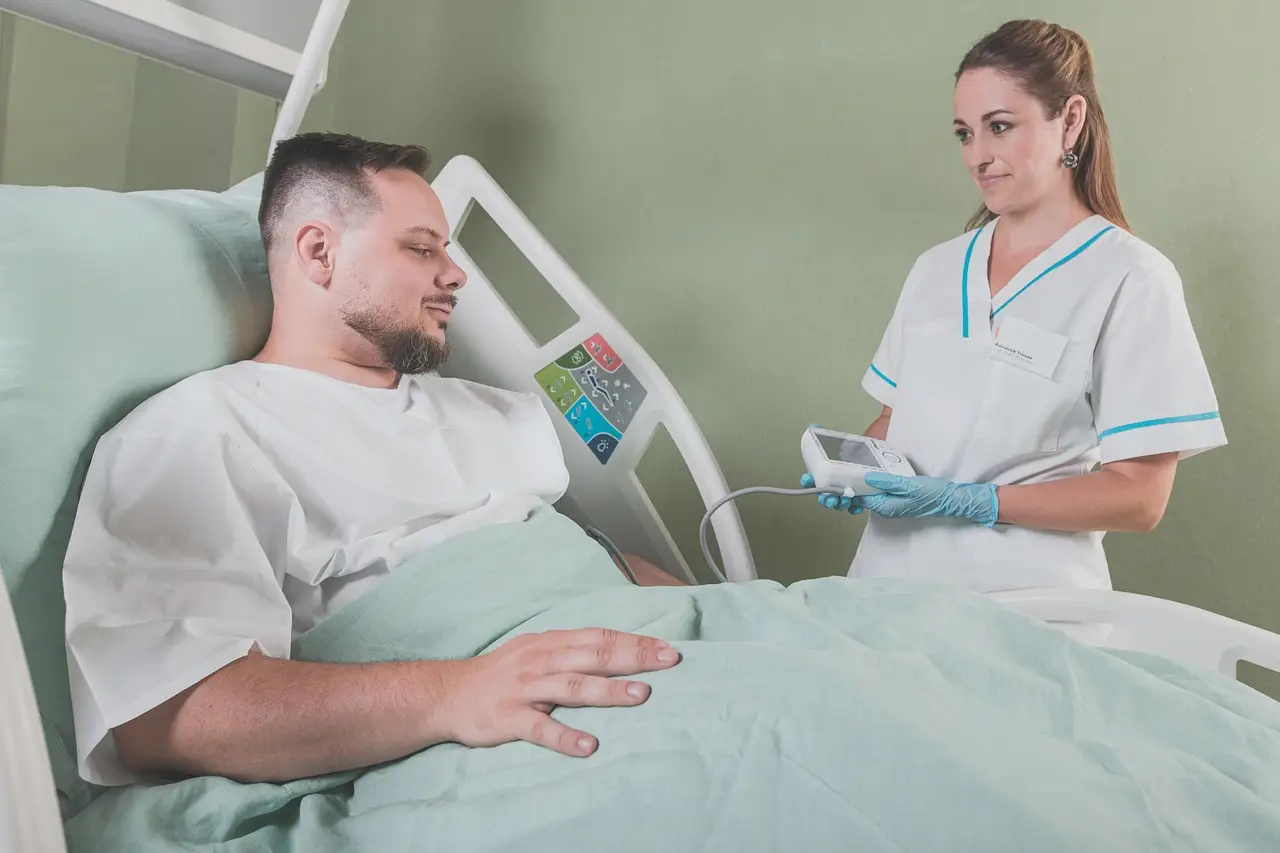
An estimated 100,000 brain-injury patients in the US who appear unresponsive may retain some level of awareness. That figure, drawn from recent reporting on disorders-of-consciousness research, anchors a clinical review by speech-language pathologists Marissa Colombo and Abler of Centre for Neuro Skills, both certified brain injury specialists, on supporting nonspeaking patients after traumatic brain injury.
What does the scale of the problem look like?
Roughly 2.8 million traumatic brain injuries occur annually in the United States, according to CDC data. Many produce significant communication impairment across a spectrum running from limited speaking to apparent disorders of consciousness such as coma. Even patients with the most severe disorders of consciousness may preserve thoughts and feelings.
The anatomy of the deficit matters. Brain injury can disrupt any combination of motor speech function, receptive and expressive language, oculomotor function, respiration, phonation, fine and gross motor skills, and motor planning. Yet some functions are almost always preserved. This is why the authors prefer the term nonspeaking over nonverbal — the latter wrongly implies absent language or cognition. A 2025 terminology survey by Zisk and colleagues in Augmentative and Alternative Communication supports the distinction.
What does communication loss do to mental health?
Functional communication ability — and language functioning to a lesser degree — predicts psychological wellbeing and social health. The review cites evidence that loss of functional communication after brain injury is strongly associated with depression, anxiety, social isolation, and diminished quality of life.
The clinical failure point is assessment. Standardized psychiatric instruments rely on verbal self-report, so clinicians reach for the GAD-7 or PHQ-9 rather than visual choice-based instruments such as the Visual Analogue Mood Scales (VAMS) or Dynamic VAMS (D-VAMS). The authors caution that a visual tool is not a one-and-done solution. It must be paired with skills in reading nonverbal signaling.
Those signals are informative. A blink, a furrowed brow, a wince, a head turn, or rubbing of the body may be the patient's only communication channel. Work on people with aphasia suggests they interpret partners' nonverbal cues better than unimpaired individuals, likely through enhanced recruitment of underutilized language areas for emotional processing.
What frameworks are available?
Two structured approaches appear in the review:
- FRAME — taught to medical students at the University of Washington (Baylor et al., American Journal of Speech-Language Pathology, 2019). The clinician familiarizes themself with the patient's existing communication methods before the visit, reduces speech rate, assists communication by confirming understanding, mixes aids such as gestures, picture boards, writing, and drawing, and engages the patient directly — speaking to the patient before family members, and asking whether guessing feels acceptable or rude.
- PURE — from the National Aphasia Association. The speaking partner expresses positive intent, names what is failing, offers a reasonable alternative such as pointing, and leverages success by giving an example for future use.
Question construction follows the patient's tools. If the system allows only yes-or-no responses, use closed questions. If the device carries a customized vocabulary, learn it before asking.
Why do patients abandon AAC devices?
Augmentative and alternative communication (AAC) — everything from alphabet boards and yes/no cards to speech-generating devices converting text or icon selection into spoken output — improves functional communication, supports cognitive-linguistic rehabilitation, decreases depressive symptoms, and enhances quality of life. Yet device abandonment persists.
The mechanisms are specific: grief over lost natural speech, unrealistic recovery expectations, and perceived stigma. Families reinforce resistance. They finish sentences, answer on the patient's behalf, fail to charge devices, or leave tools at home — and some actively discourage AAC use on the belief it impedes speech recovery. The evidence says otherwise: AAC use supports rather than reduces recovery of speech.
What does this change for the mental health clinician?
The authors position mental health clinicians as the leverage point for AAC adoption. Grief and incomplete adjustment to disability are the primary barriers; counseling that addresses grief, reframes the device, and builds agency with new communication forms increases success. Include spouses and children, who are often the key communication partners, and who may carry their own grief or feel overwhelmed by high-tech equipment.
The illustrative case — a 20-year-old patient, "Sarah," left nonspeaking after a car collision — learned a speech-generating device through speech-language pathology training, mental health support, and postacute rehabilitation. She regained the ability to express preferences and participate in treatment planning. The authors' closing argument: assume competence, collaborate across disciplines, and build AAC literacy. The psychiatric risk is documented. The remediation is procedural, not aspirational.
Original: cdc.gov
More from James Calloway
Show full bio
News editor covering regulation, policy and their impact on Doctors' Insider is a professional daily at Doctors' Insider.
68 articles
Related articles
- ChatGPT Taper Advice Preceded SUDEP Death, OpenAI Sued
- Caregivers with non-English primary language scored lower in navigation
- NLRP3 inhibition limits brain damage in mouse TBI study
- Neurocrine Launches 11-Item TDIS for Waiting-Room TD Burden Screening
- KINECT-PRO: Valbenazine Cuts TDIS Item Burden Up to 67% at Week 24