OSU Trial Tests DCE-MRI to Call Chemo Failure Early in Pancreatic Cancer
A 50-patient OSUCCC–James trial tests DCE-MRI plus the P4 perfusion phantom to detect pancreatic cancer chemo response within weeks; prior data showed 98% accuracy versus 17% for CT.
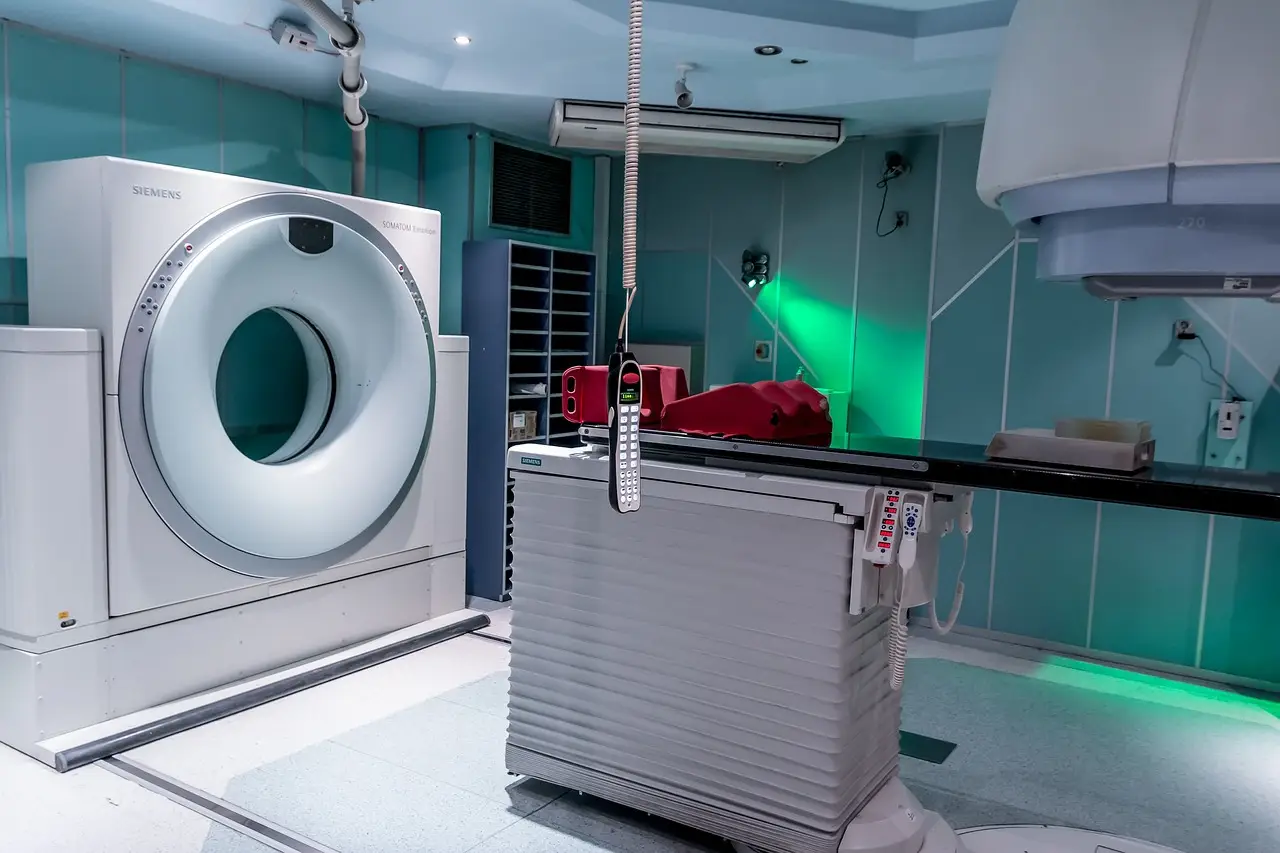
Roughly 60% of pancreatic cancer patients present with disease too advanced for surgery, and their oncologists must gamble that chemotherapy shrinks the tumor enough to resect. A new 50-participant trial at The Ohio State University Comprehensive Cancer Center—Arthur G. James Cancer Hospital and Richard J. Solove Research Institute (OSUCCC—James) will test whether dynamic contrast-enhanced MRI can flag treatment failure within weeks rather than months.
The trial, led by medical oncologist Shafia Rahman, M.D., enrolls patients with pancreatic ductal adenocarcinoma involving arteries or veins near the pancreas but still convertible to resectable disease with neoadjuvant treatment. The imaging tool was built at OSUCCC—James with Harrison Kim, Ph.D., radiology scientist and director of the Quantitative Medical Imaging Laboratory.
Why CT fails the timeline
"Unfortunately, the tools we have right now (CT scans) cannot give us information about how well the treatment is working to kill cancer cells earlier in the disease treatment process," Rahman said. The clinical stakes are concrete: patients with advanced disease commonly develop muscle wasting and weight loss that make sustained treatment hard to tolerate.
"We know time matters a lot in this disease. A couple of weeks can really change outcomes," Rahman said. A quantifiable perfusion readout, good or bad, would let oncologists switch to an alternative regimen in real time rather than wait out a failing one. "The gold standard is to remove the tumor through surgery, but we have to get patients to the point they are a surgery candidate, and that means shrinking the tumor."
What does the trial design look like?
The protocol is straightforward:
- Baseline DCE-MRI within two weeks before therapy starts.
- Standard-of-care chemotherapy chosen by the treating oncologist: either gemcitabine plus nab-paclitaxel, or fluorouracil, oxaliplatin, irinotecan and leucovorin.
- Repeat DCE-MRI at roughly six weeks after treatment begins, and again within one week before surgery.
The primary endpoint evaluates whether DCE-MRI information correlates with higher rates of complete surgical resection compared with standard-of-care management alone.
What does the prior evidence show?
The trial builds on a prospective study led by Kim and published in European Radiology (Martin D. Holland et al., 2026; DOI: 10.1007/s00330-026-12810-2). In patients with pancreatic ductal adenocarcinoma, changes in DCE-MRI measurements after only seven weeks of chemotherapy predicted tumor response at 17 weeks with up to 98% accuracy — provided the scans were corrected with a point-of-care portable perfusion phantom, dubbed P4, which Kim's group developed to normalize differences between MRI scanners.
The comparator is unflattering. Standard CT assessment at about eight weeks identified a response in only 17% of patients.
"MRI is a very conventional tool that has been widely used. However, there are some variations of the measurement in the existing data sets," Kim said. "Our tool provides a standard for the measurement so even if the MRI machine has a margin of error, we can fix it using this device and detect any small, but important, change with high precision."
The clinical payoff: time
DCE-MRI measures tumor blood perfusion, a functional readout of disease status that structural imaging lacks. For patients, the wager is that earlier information buys earlier decisions: continuation toward resection, or a switch before side effects accumulate on a regimen that is not working.
"We want to do everything in our power for those patients who have the potential to have the cancer removed through surgery, and we don't miss that window," Rahman said. "Or in terms of switching treatments early on without having patients stay on a treatment longer and suffer more side effects if it's not working."
Fifty patients, two scans, one phantom, and a resection-rate endpoint. The trial asks whether an old machine, properly calibrated, can outperform the eight-week CT checkpoint that currently leaves most responders unclassified.
Source: Medical Xpress
More from Amara Osei
Show full bio
Correspondent covering money, funding and market shifts around Doctors' Insider is a professional daily at Doctors' Insider.
60 articles
Related articles
- Daraxonrasib plus chemo shrinks tumors in 60.7% of metastatic pancreatic cancer patients
- Texas Oncology Lifts Biomarker Testing to 90% — Panels Say Equity Still Hangs on Systems
- Pan-RAS glue ERAS-0015 shrinks 44% of pancreatic tumors in Phase I
- GLS-1 inhibitor IACS-6274 shrinks tumors in 9 of 13 platinum-resistant ovarian cancer patients
- ADC ADCE-D01 Shrinks Tumors in 30% of Sarcoma Patients in Phase I