2.8% Ulcer Rate Beats 5% Benchmark in Limb Preservation Model
City of Hope's 5-year initiative cut ulcer incidence to 2.8% and amputations to 0.43% across 469 patients, using QR-code visual education with 78% engagement and zero added staffing.
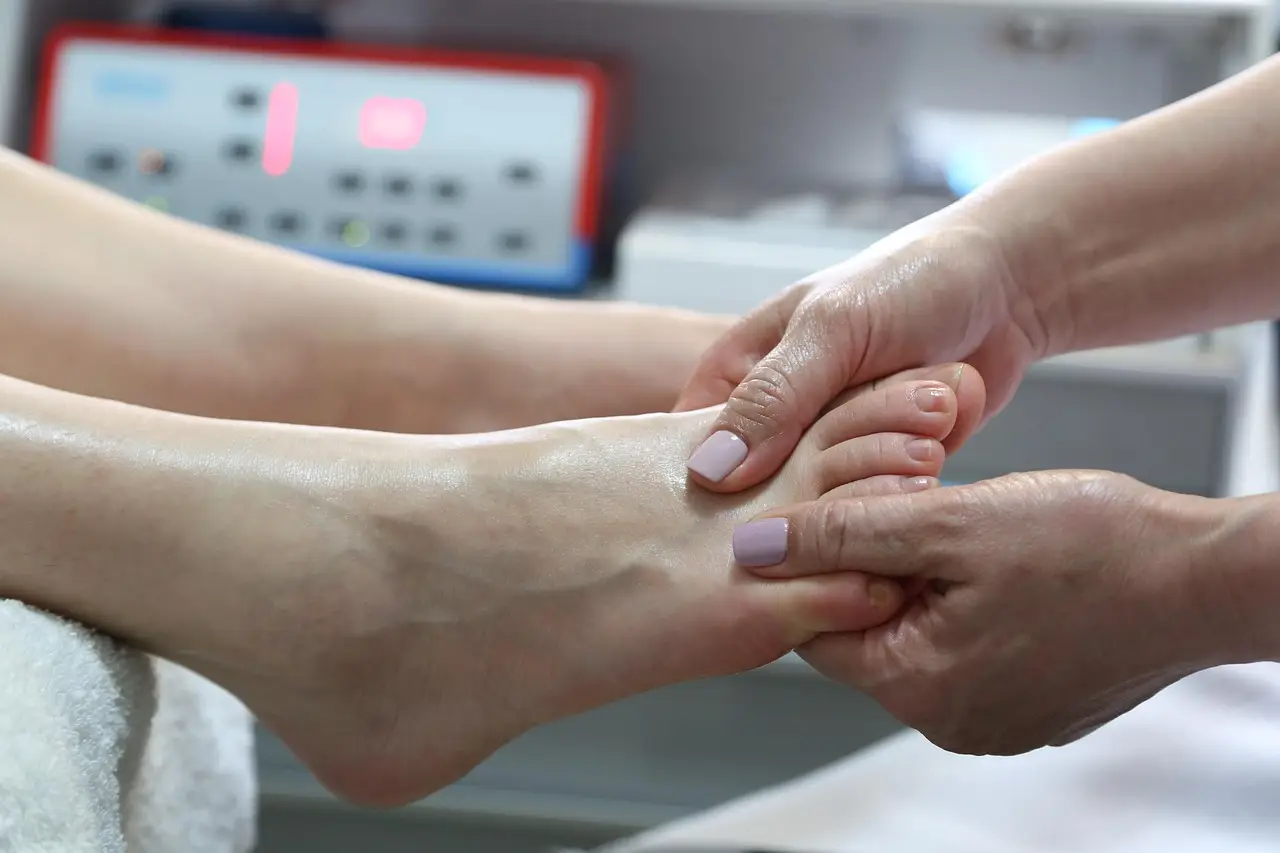
A five-year limb preservation initiative at City of Hope recorded an annual diabetic foot ulcer incidence of 2.8% and an annual major amputation rate of 0.43% across 469 patients with diabetes receiving active cancer treatment, figures published in the American Journal of Managed Care and reported against an estimated national ulcer incidence of roughly 5%. The Healthy People 2030 benchmark, set by HHS, targets 5.5 amputations per 1,000 adults with diagnosed diabetes, or 0.55% annually. The initiative beat both numbers.
The commentary, authored by Paul Han, DPM, MS, of City of Hope, and JG of Harvard Medical School, argues that diabetic limb loss is a system failure rather than a clinical inevitability. Han's prior publication in the Journal of the American Podiatric Medical Association (2026;116(2):25108) underpins the outcome data.
What drives the economics?
The mean cost of an ulcer episode ending in amputation runs $44,790 in direct medical costs alone, according to the analysis cited. That figure excludes rehabilitation, prosthetics, disability and lost productivity. Preventing ten such episodes annually would avoid roughly $450,000 in direct costs within a single health system.
CMS has now entered the equation. The calendar year 2026 Physician Fee Schedule final rule overhauled Medicare payment for skin substitutes, a response to rapid growth in spending on wound care products. The authors frame this as an inflection point: prevention has become economically necessary, not optional.
How does the model work?
The intervention pairs risk-stratified podiatric care with a visual, symptom-focused education library called Diabetes Guardians 2001 (DG2001), developed by Han from more than 10,000 diabetic foot cases accumulated over four decades of academic and private practice. The library contains more than 200 deidentified clinical photographs across 16 chapters, is available in 12 languages, and is accessible at www.dg2001.com.
Delivery is deliberately frictionless. Patients scan a QR code. No app, no registration, no IT integration, no personally identifiable information collected, no additional staffing. Engagement counted as scanning the code and opening at least one chapter.
In real-world implementation across three settings — a federally qualified health center, a specialty diabetic foot clinic, and an academic endocrinology practice — 188 of 242 eligible patients, or 78%, engaged with the education, according to Han's unpublished data. Roughly 80% is the headline figure the authors use. Patients frequently revisited content and involved family members, particularly where diabetes-related visual impairment made assisted review necessary.
Why does reimbursement fall short?
Current payment models fund procedures, visits and admissions while leaving early detection and preventive podiatric involvement comparatively underfunded, the authors write, citing Frykberg and colleagues in Diabetes Care (2022;45(10):e144-e145). Health systems measure services delivered but rarely track complications avoided, so prevention stays both underfunded and underrecognized. Savings fragment across stakeholders, weakening incentives further.
Disparities sharpen the case. Black, Native American and Hispanic individuals carry higher rates of diabetes-related amputation than non-Hispanic White individuals, as do low-income and rural populations, per Clayton and colleagues (2023).
What should managed care organizations do?
The authors prescribe five moves:
- Integrate diabetic foot ulcer and amputation metrics into quality frameworks such as HEDIS
- Align incentives toward early detection and prevention
- Deploy multilingual, culturally tailored education in underserved populations
- Expand access to coordinated podiatric care in primary care and community settings
- Adopt visual education built on authentic clinical photographs rather than text-heavy handouts
One caveat deserves weight. Diabetic foot disease develops over years, and the reported outcomes reflect five years of sustained implementation from 2019 to 2023. Prevention is a long-term investment, not a quarterly savings line.
Han discloses authorship of a related book and founding of Diabetes Guardians, LLC, which publishes DG2001; he draws no salary or royalties from the company. The manuscript received spelling and grammar assistance from AI tools, with all content the authors' responsibility.
The verdict lands cleanly. A QR code, a photograph library and a podiatrist beat a $44,790 amputation episode. The infrastructure was never the barrier. The incentives were.
Original: odphp.health.gov
More from Amara Osei
Show full bio
Correspondent covering money, funding and market shifts around Doctors' Insider is a professional daily at Doctors' Insider.
60 articles
Related articles
- 1 in 9 US Adults on a GLP-1, and Obesity Still Wins
- 830 Million With Diabetes, Half Without Insulin: Access Gap Grows
- US Faces Up to 187,130-Physician Shortfall by 2037
- GLP-1 uptake jumps ninefold, but disparities widen for obesity care
- New, Refurbished or Leased: The Real Cost Math for Practice Equipment